Amphibians
of Morocco
Discover Morocco's 14 amphibian species, from salamanders and newts to frogs and toads inhabiting forests, wetlands, streams, ponds, and Dayas.
A fauna shaped by strong geographic contrasts
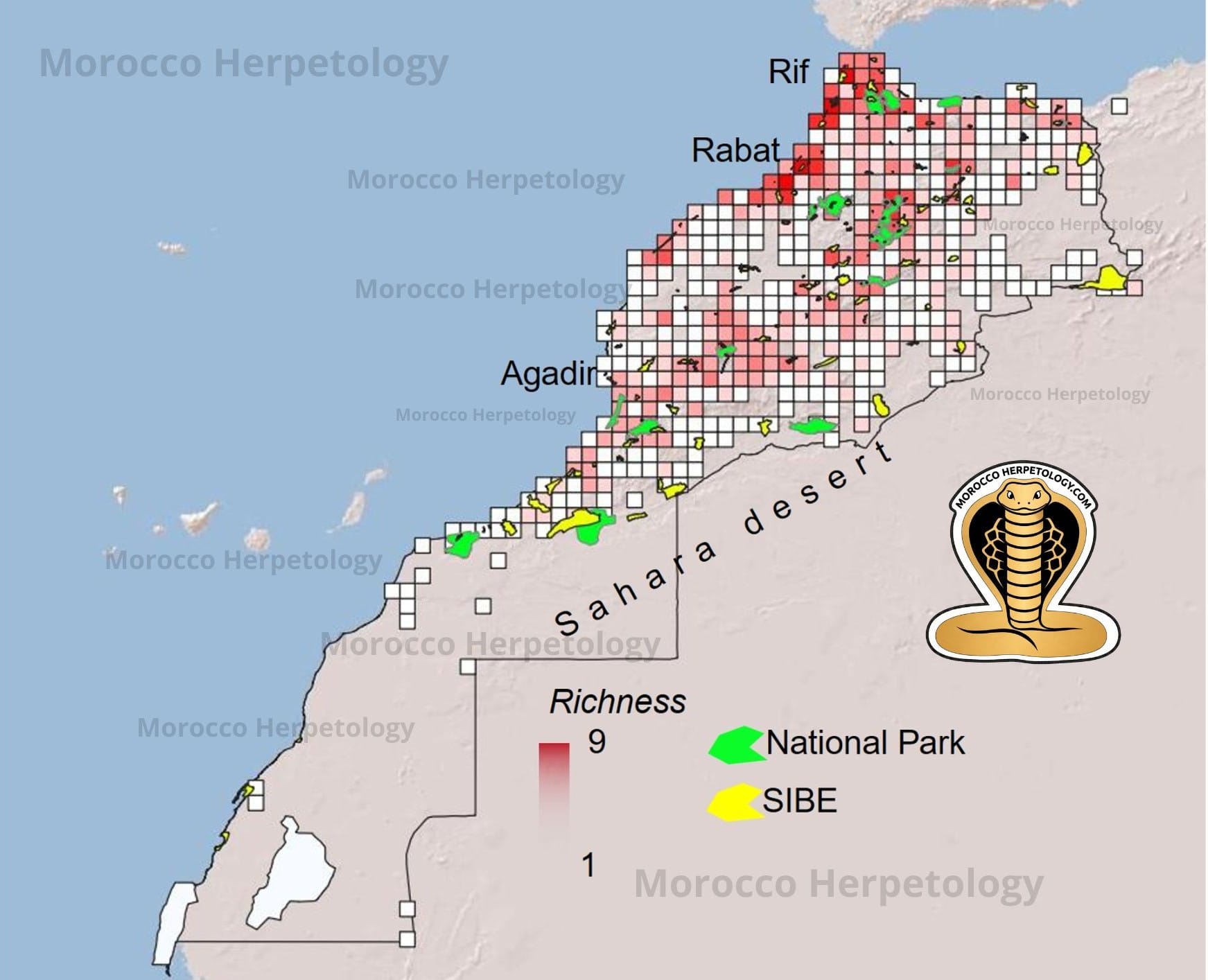
The highest species richness occurs in northern Morocco, particularly in the Rif, Middle Atlas and northern Atlantic plains. These regions receive more rainfall and contain forests, streams, ponds, Dayas, and other suitable breeding habitats.
It also notes that important amphibian habitats remain unprotected, including temporary ponds: Dayas and Gueltats.
Higher rainfall and varied habitats are highlighted by the source page.
Amphibians are restricted to isolated habitats where water remains available, with species adapted to semiarid and seasonal environments.
Temporary Dayas and agricultural wetlands support several species, including Moroccan endemics.
Meet Morocco's 14 amphibians
Search and compare Morocco's amphibians by order, family and conservation status. The quick cues below help distinguish the principal body types before you browse individual species.
Showing 14 species
IUCN national status: LC = Least Concern · NT = Near Threatened · VU = Vulnerable · EN = Endangered · DD = Data Deficient. ★ ENDEMIC follows the Moroccan-endemic flag used on the Morocco Herpetology checklist.
No species match the selected filters.
Why Morocco's amphibian habitats matter
The source page emphasizes habitat pressure, climate change and protection gaps, while highlighting several amphibians with elevated conservation concern.
Loss and destruction
Habitat loss is identified as a threat to many anurans, while habitat destruction is specifically mentioned for salamanders and for Barbarophryne brongersmai.
Climate change
Climate change is cited among pressures linked to amphibian declines and as a potential threat to Barbarophryne brongersmai.
Sensitive wet environments
Pollution is listed among threats to salamanders, while many amphibians on the page depend on wetlands, streams, ponds or seasonal water bodies.
Critical habitats remain unprotected
The source page specifically cites Days and Gueltats as examples of important habitats that remain unprotected.
Explore the complete amphibian guide
Use the filters to compare Morocco's 14 amphibian species by order and family.
Browse all species →